
Project Showcase
Kew Gardens Millennium Seed Bank Digital Assistant
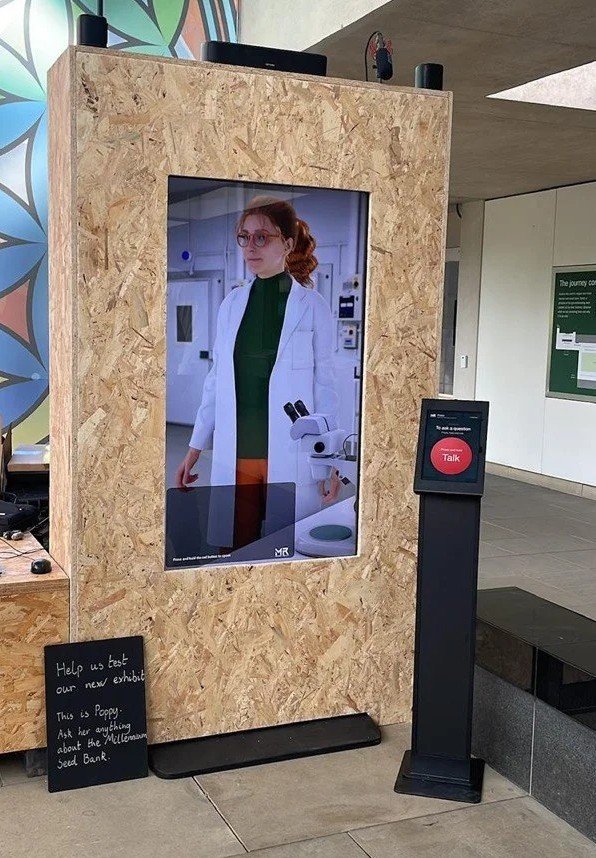
Motion Realm Studios partnered with Royal Botanic Gardens, Kew to develop a proof-of-concept conversational digital assistant for the Millennium Seed Bank atWakehurst — combining real-time character animation, Unreal Engine, AI conversation systems and interactive visitor technology.
Project Overview
Kew Gardens / Millennium Seed Bank Digital Assistant
Bringing heritage, science and Digital Humans to Life with Real-Time Technology
Motion Realm Studios worked with Royal Botanic Gardens, Kew, to prototype an interactive digital guide designed for public engagement at the Millennium Seed Bank visitor area. The project explored how a lifelike digital human could support visitor learning, answer approved questions, and create a more engaging way to experience scientific and cultural interpretation.
The pilot was developed as a controlled proof of concept, with Kew defining the purpose, audience, subject matter and success criteria. Motion Realm’s role was to design, build and configure the avatar experience, including the character, animation, Unreal Engine environment, conversational AI framework and visitor-facing interaction system.
The Challenge
Museums, gardens, heritage spaces and visitor attractions are constantly looking for new ways to make information more accessible, engaging and memorable. For Kew’s Millennium Seed Bank, the aim was to create a digital assistant that could feel friendly, approachable and informative, without overwhelming visitors or creating threshold anxiety. The assistant needed to reflect the setting, communicate clearly, stay within approved content boundaries, and provide a safe public-facing experience.
This meant the project had to balance:
Public-facing interaction
Scientific accuracy
Kew-approved content and clear guardrails
Visitor accessibility
Brand alignment
Kew-inspired character design and location
Real-time performance
Future scalability
Framework that can support other locations and avatars

The Solution
Motion Realm Studios worked with Royal Botanic Gardens, Kew, to prototype an interactive digital guide designed for public engagement at the Millennium Seed Bank visitor area. The project explored how a lifelike digital human could support visitor learning, answer approved questions, and create a more engaging way to experience scientific and cultural interpretation.
Key Features
– Real-time digital human
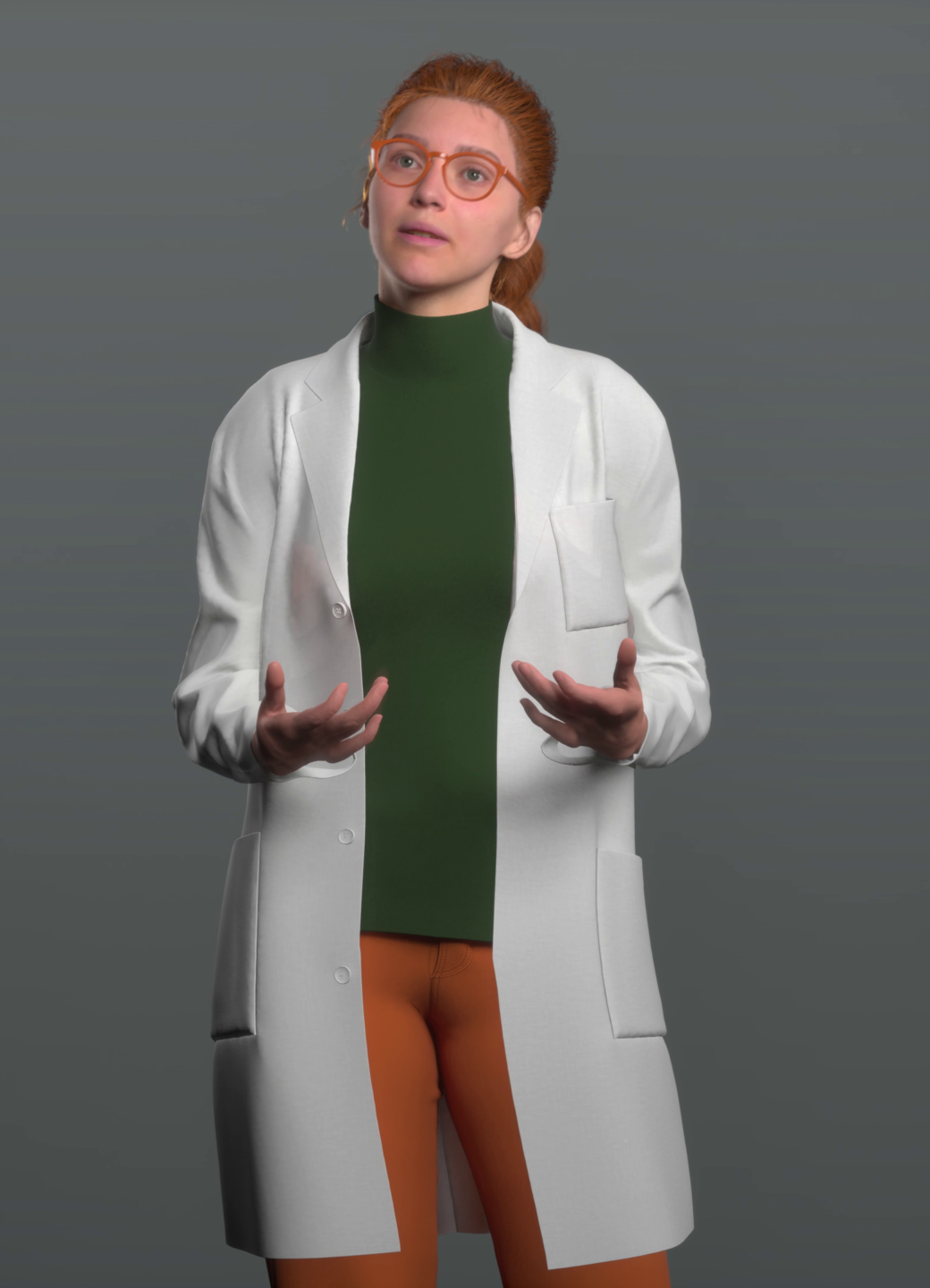
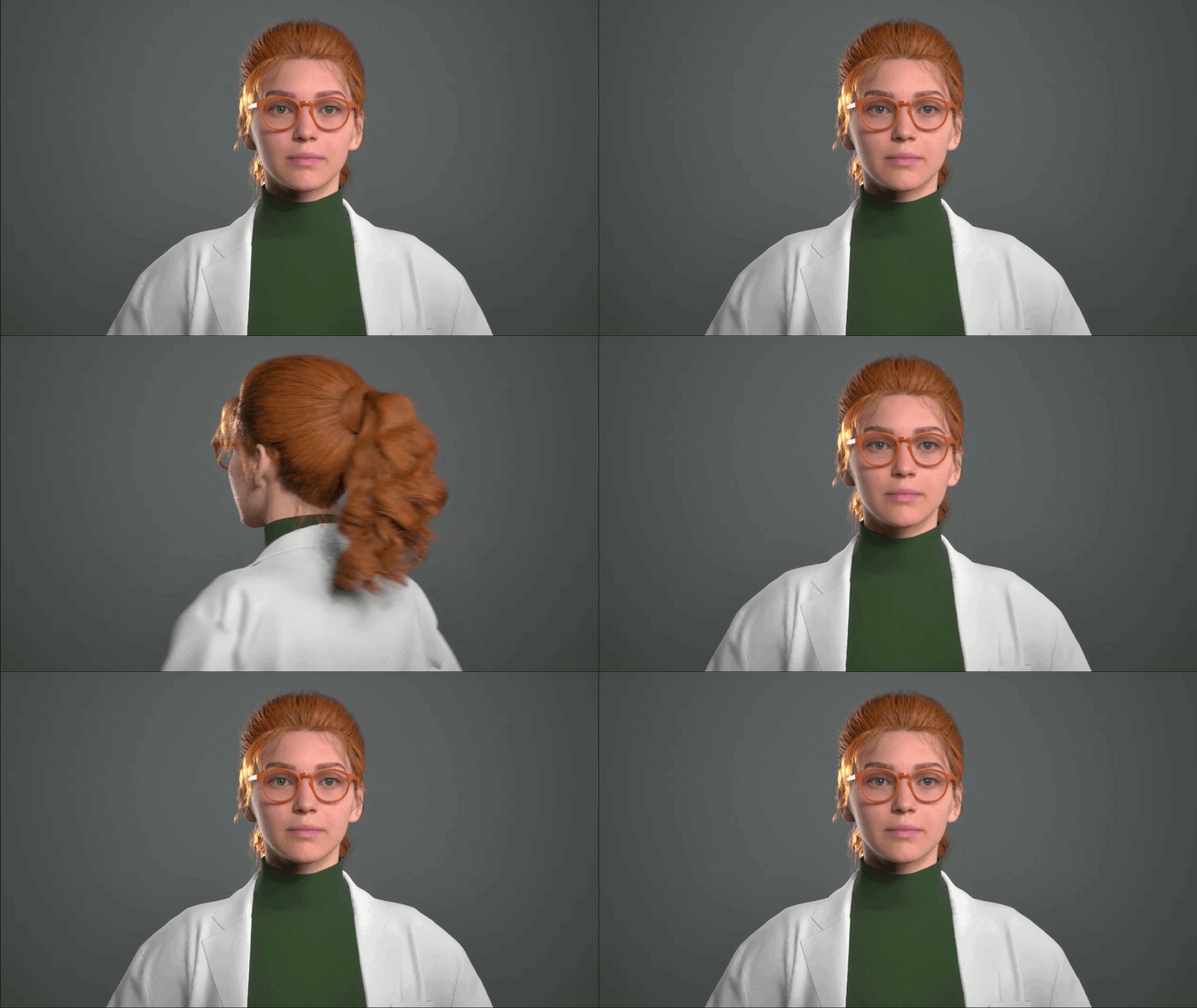
A lifelike avatar designed in line with Kew’s brief: a friendly scientist wearing a lab coat, smart casual clothing, glasses and reddish-brown hair.
– Unreal Engine presentation layer
The character and environment were developed for real-time display, allowing the avatar to be presented on a large public screen.
– Conversational AI framework
The assistant was configured to respond using approved information only, with boundaries around out-of-scope topics, speculation and unapproved content.
– Visitor-facing iPad interface
A simple control interface allowed visitors to press, hold and talk, with feedback from Kew helping refine the wording, typography and accessibility of the layout.
– Photogrammetry environment workflow
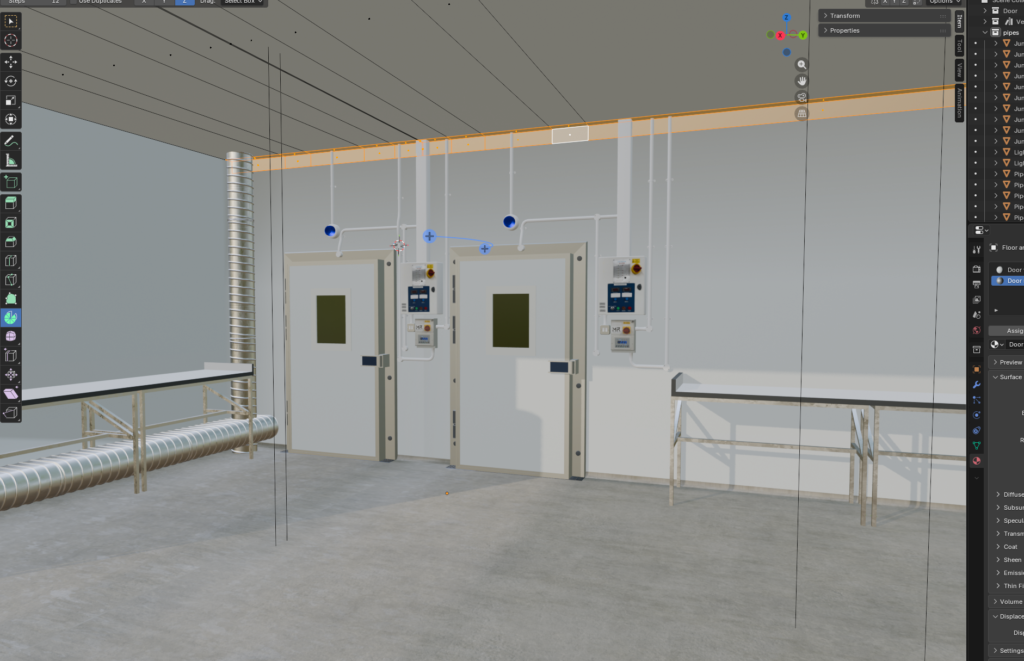
Motion Realm captured and processed visual reference from the Millennium Seed Bank at Kew, then recreated an environment in Unreal Engine to place the avatar in a setting connected to the visitor experience.
Creative and Technical Development
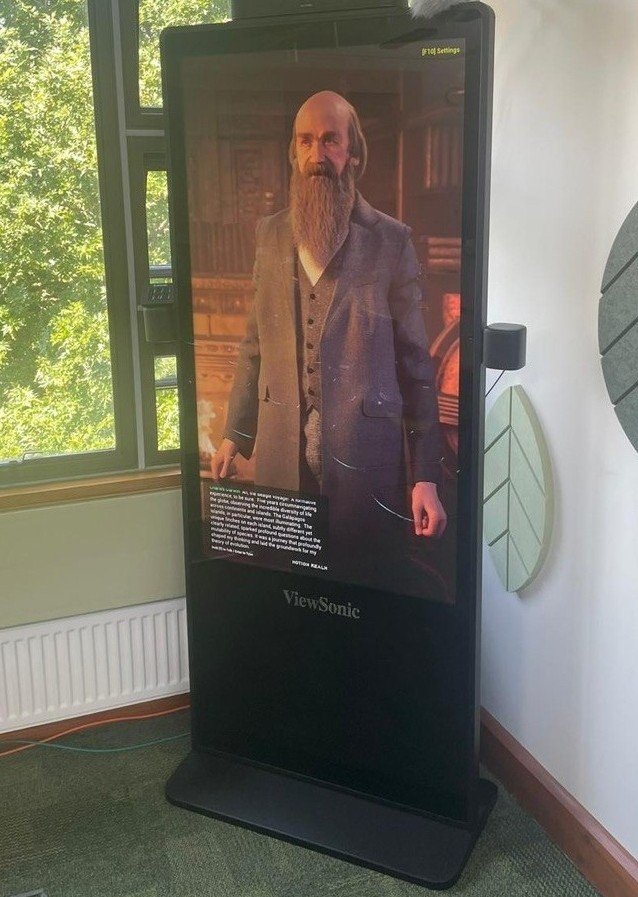
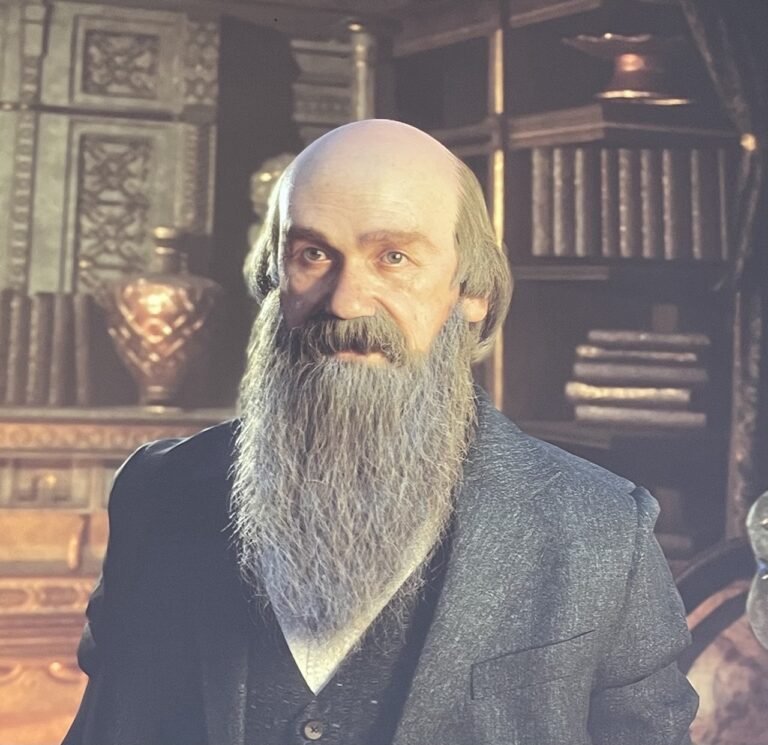
The development process began with an earlier prototype of a Charles Darwin digital character, which was used to test the creative and technical pipeline before moving into the Millennium Seed Bank assistant.
From there, Motion Realm built the final assistant through a full real-time character production workflow.
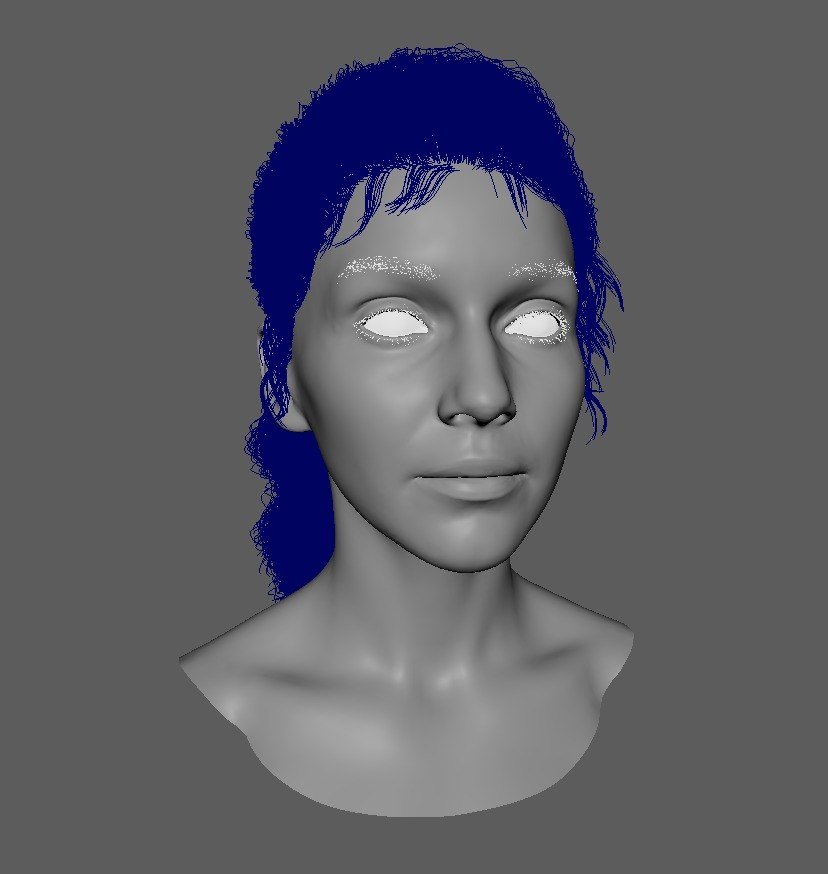
1. Character Sculpting and Grooming
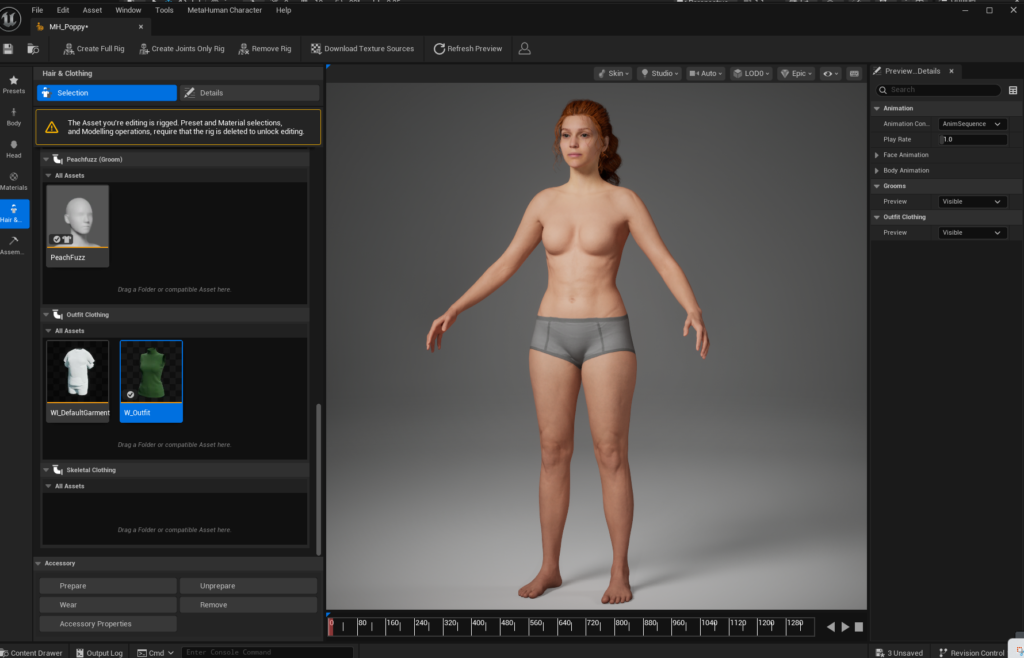
2. MetaHuman and Unreal Engine Preparation
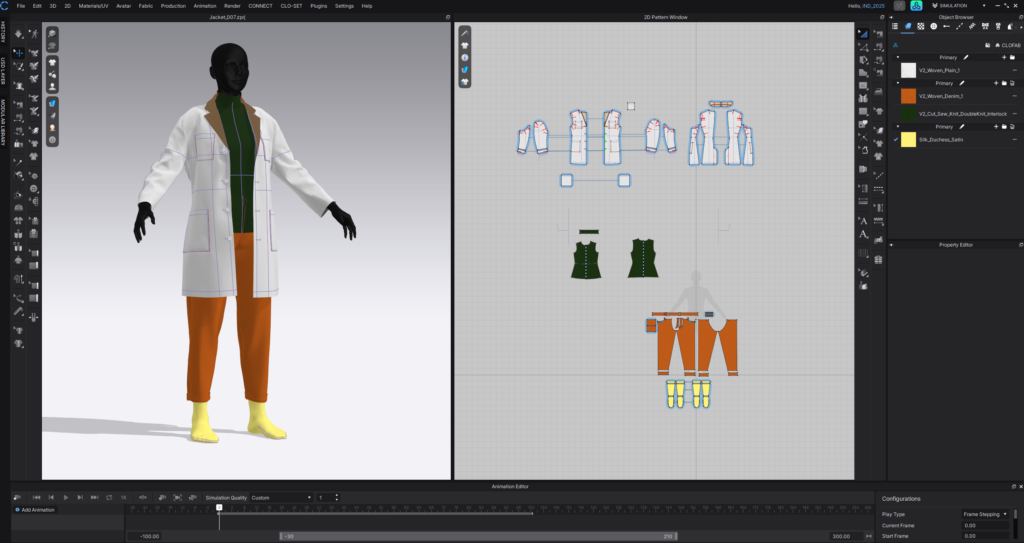
3.Clothing Design
4.Look Development
5.Environment Capture
6. AI and Interaction System
Partnership with

This project was developed in partnership with Royal Botanic Gardens, Kew, as part of a public proof-of-concept for the Millennium Seed Bank at Wakehurst. The project was designed as a shared experiment and evaluation opportunity for both parties, with Kew providing direction on the assistant’s appearance, voice, setting, content boundaries and visitor-facing requirements.
Motion Realm Studios provided the creative and technical development pipeline, including: • Avatar design and animation • Real-time Unreal Engine presentation • Conversational AI framework • Kew-approved content ingestion • Visitor interface development • Deployment and configuration support
Responsible AI and Content Governance
A key part of the project was ensuring that the assistant behaved safely and appropriately in a public setting.
The digital guide was designed to use content provided or explicitly approved by Kew. The project documentation also set out prohibited content sources, including live web search, Wikipedia, generic LLM training data, social media and staff-only documentation.
The assistant was also designed to avoid areas such as:
- Scientific speculation
- Unpublished or ongoing research
- Medical, legal or environmental advice
- Political or activist viewpoints
- Internal staff information
- Commercial endorsements or fundraising
This makes the system suitable for organisations that need innovation, but also require trust, accuracy and control.
Visitor Experience
The final experience was designed to be simple and intuitive.
Visitors could approach the installation, read the prompt, press and hold the red button on the iPad interface, ask a question, and then receive a spoken response from the avatar.
Kew feedback helped refine the interaction design, including the use of Franklin Gothic, avoiding all-caps text for accessibility, and making the call to action clearer with wording such as “Press, hold and talk”.
Suggested section heading:
A natural way for visitors to ask questions
Suggested copy:
Instead of relying only on panels, posters or static screens, the digital assistant gives visitors a more conversational way to explore information. It supports curiosity in the moment, allowing people to ask questions in their own words while still receiving responses shaped by approved content.
Results and Value
Digital humans can create a bridge between physical spaces and interactive storytelling.
For museums, gardens, galleries, universities and visitor attractions, this type of system can support:
- Public engagement
- Education and interpretation
- Visitor guidance
- Exhibition storytelling
- Multilingual or future multi-avatar experiences
- Accessibility-focused interaction
- Repeatable digital installations
- Scalable AI-guided experiences
Motion Realm Studios can design and deliver immersive digital assistants that feel visually engaging, technically robust and aligned with an organisation’s values.
What can we help you build?
Motion Realm Studios creates interactive digital humans for museums, exhibitions, public spaces, education, heritage, retail and branded experiences.
From character design and Unreal Engine development to AI conversation systems and visitor-facing installations, we help organisations transform information into memorable interactive experiences.
Ready to create your own digital guide?
Contact Motion Realm Studios to discuss your project.
Bring your story to life
with a digital assistant.